
Why Your Knee Pain Feels Worse in Hot Weather
Joint stiffness isn't just a winter issue
Joint pain has a reputation as a cold weather problem. Damp mornings, frosty starts, and the ache and stiffness that arrive with the first proper drop in temperature. It's such a familiar association that people who struggle in summer often assume something else must be wrong with them.
It isn't unusual at all. Plenty of patients with knee arthritis tell us their knees are no better in July than they were in January, and some find the warmer months noticeably worse. The reasons are less obvious than the cold weather version, which is partly why they get overlooked. With the UK experiencing record high temperatures and extended heatwaves, you may be noticing this now more than ever before.
What might be behind knee pain in high heat
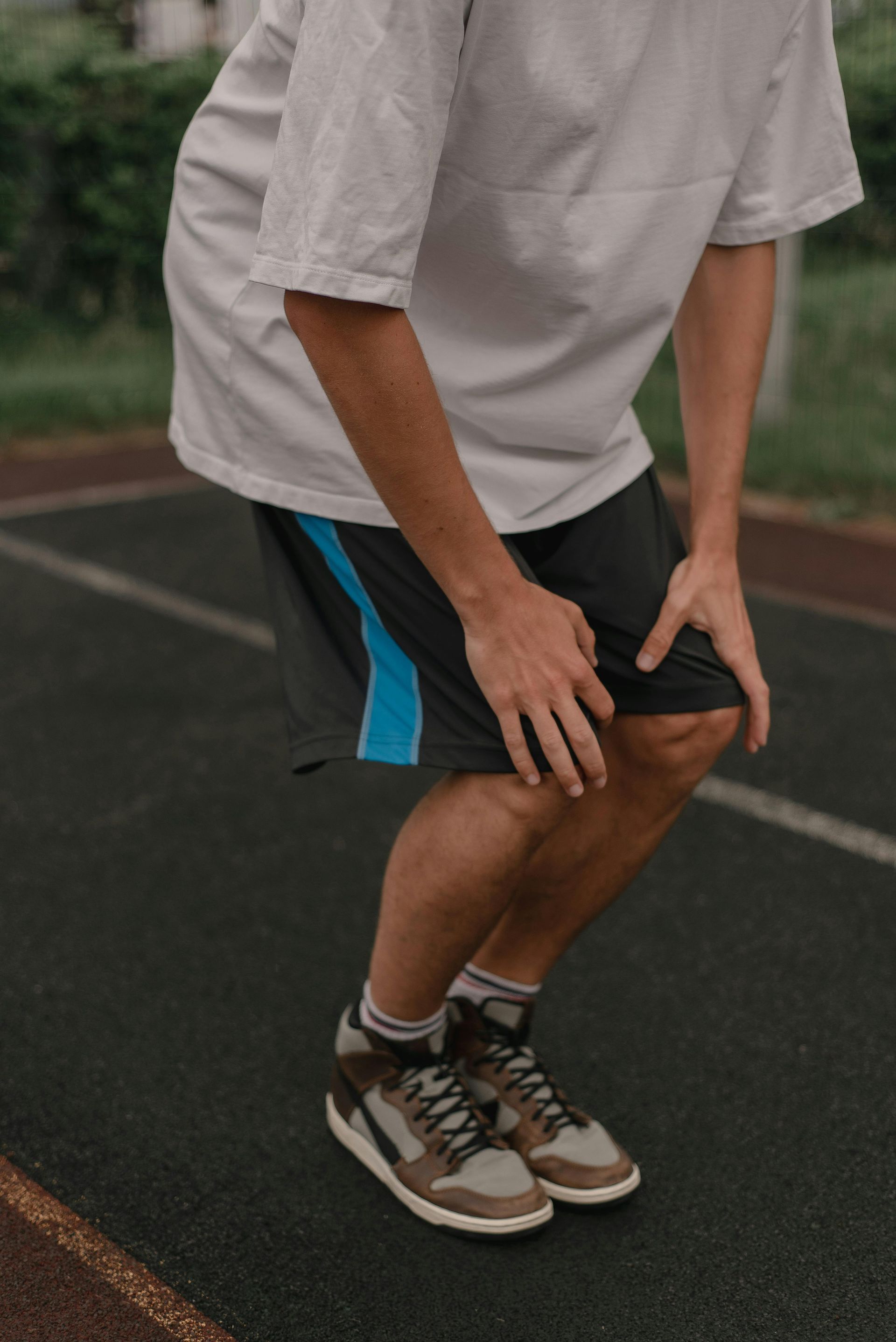
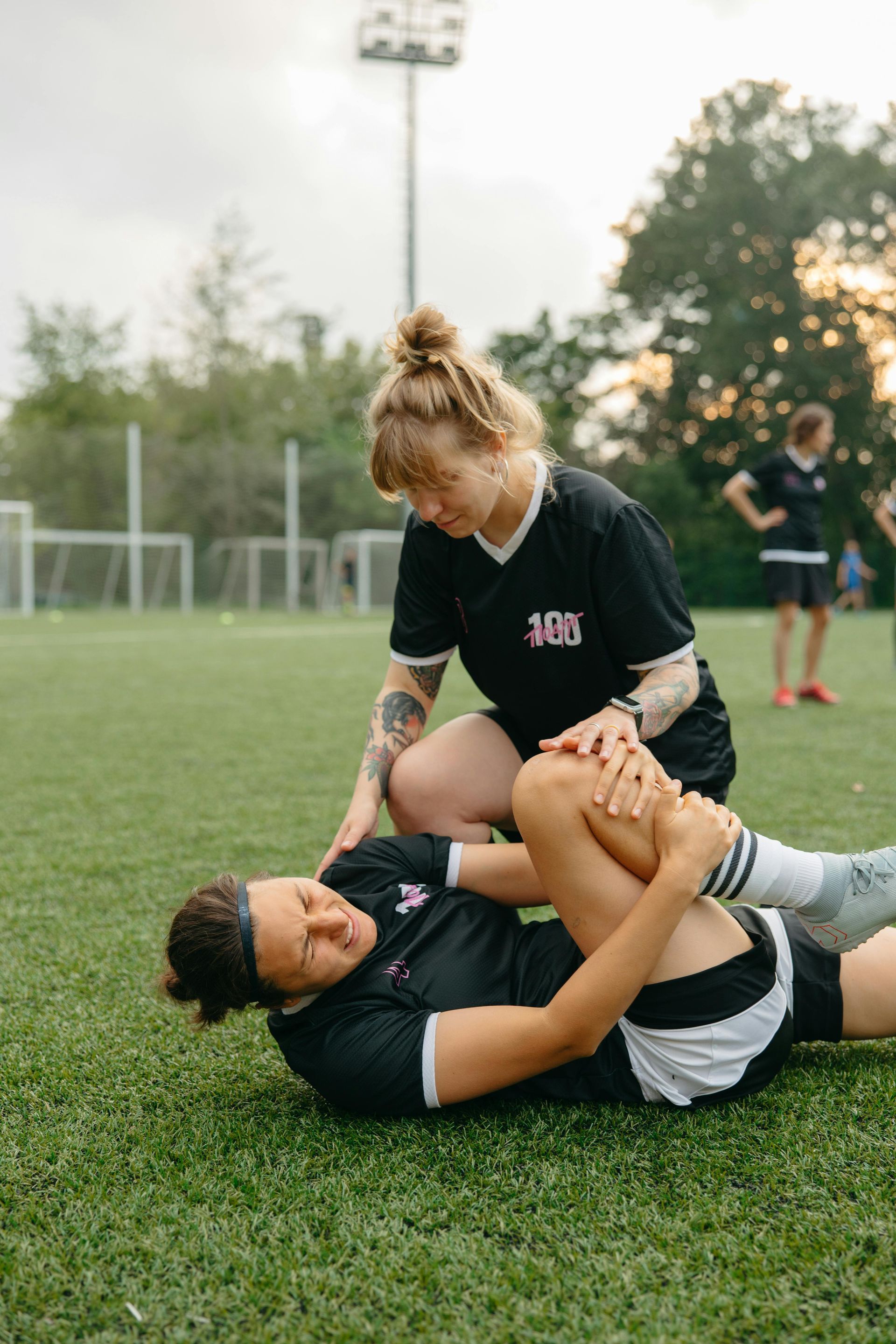
Activity levels rise sharply. This is the one we'd point to first, and it's the one that's most obvious. Light evenings and dry ground mean more walking, more gardening, more five-a-side, and more standing around at events. Knees that coped fine with a quiet winter suddenly have a lot more asked of them, often with no build-up at all. In an arthritic knee, where the cartilage is already doing less of the cushioning work, that jump in load is felt sooner and lingers longer. It's a load problem dressed up as a weather problem.
Footwear changes. Sandals, flip flops and going barefoot around the house all offer far less support and cushioning than the shoes we typically wear in the winter. If you've gone from cushioned trainers to flat sandals in the space of a fortnight, your knees are absorbing more of every step, and on harder ground at that.
Dehydration. It's harder to stay properly hydrated in the heat than most people think, particularly if activity has gone up at the same time. The link between hydration and joint comfort isn't as clear-cut as it's sometimes presented, but there's no downside to getting it right, and dehydration will make you feel worse generally.
Pressure and humidity. Changes in barometric pressure are the usual suspect in weather-related joint pain, and humid, heavy air is often reported alongside it. It is worth noting that knee pain under low or high pressure can be fairly subjective and impact people differently. The research on it is genuinely mixed, and studies looking specifically at knee osteoarthritis have struggled to produce consistent results.
Swelling in the heat. Warm weather can leave hands, feet and ankles feeling puffy, and some people notice the same thing around a knee that already has a problem. Where there's existing swelling in an arthritic joint, extra fluid retention tends to be felt rather than ignored.
Not all knee arthritis behaves the same way
When most people say 'arthritis', they mean osteoarthritis, which is the wear-related form and by far the most common in the knee. It typically brings stiffness after sitting still that eases once you get moving and pain that tracks fairly closely with how much you've asked of the joint that day.
Inflammatory arthritis, including rheumatoid and psoriatic, works differently. Morning stiffness tends to last longer, the joint can feel warm and visibly swollen, and symptoms often show up in more than one joint at a time. That distinction matters in summer, because a knee that swells in the heat and a knee that swells because of active inflammation need very different management.
It's also worth saying that plenty of people carrying early knee arthritis have never been diagnosed with it. They know the knee acts up on long days, and they've never had a reason to look into it further. A summer of higher activity is often what turns that background issue into something harder to ignore.
How Weather Impacts Knee Pain
Weather is easily the most discussed trigger for joint pain, and it's the one patients bring up most often. That being said, it's worth being careful about how much weight it can carry.
The difficulty is that weather affects people very differently. Two patients with similar scans and similar histories can have completely different weeks in identical conditions. Some are reliably worse in the cold, some in the heat, and a fair number notice nothing much either way. Cause and effect is hard to isolate when the thing you're studying changes daily and everyone's response to it varies.
Our view, for what it's worth, is that weather can be a factor, but it's overstated as an explanation. It's a convenient one, because it's external and there's nothing to be done about it. The risk is that it becomes the answer to every flare-up, and a genuine underlying issue gets filed under "it's just the heat" for another eighteen months. If your knee only ever hurts on hot days, that's one thing. If it now hurts on most days and hot days are simply the worst of them, that's a different conversation.
What actually helps
None of this is complicated, but it does need doing consistently rather than after the pain has already arrived.
Keep your fluid intake up. Particularly on days when you're outdoors or active for long stretches. It won't fix a structural knee problem, though it removes one variable, and it’ll generally keep you feeling better. Dehydration also runs the risk of making you more unsteady, and a fall or twist can cause major joint pain.
Choose lower-impact activity when it's hot. Swimming, cycling and cross-training keep you moving without loading the joint the way running on hard, dry ground does. This isn't about doing less; it's about spreading the load differently. Low-impact activities are good activities for people with osteoarthritis anyway and are a good idea to bring into a routine.
Don't rest the knee completely. This is the most common mistake we see with knee arthritis. Total rest during a flare feels sensible, but arthritic joints generally stiffen and weaken with inactivity, and the surrounding muscle is doing a lot of the protective work. Reduced, gentler movement beats none at all.
Build up gradually. If you're returning to a sport after a quiet winter, the jump in volume is usually the problem rather than the sport itself. Add distance or intensity in small steps over a few weeks.
Don't abandon supportive footwear entirely. Save the flat sandals for shorter days on your feet, and keep proper shoes for anything involving distance or hard surfaces. There are also summer footwear options; specifically designed shoes for knee arthritis, and these are worth considering.
Stretch as routine, not as rescue. Basic quad, hamstring and calf work does more when it's a daily habit than when it's something you reach for once the knee has already flared. For a few basic routines, check our guide to knee stretches.
When it's worth getting your knee pain looked at
Self-management has a ceiling, and it's worth recognising when you've hit it. Book an assessment if the pain is following a regular pattern, if it's clearly worse than it was this time last year, if the knee is swelling, locking or giving way, or if it's changing what you're willing to do. Pain that quietly reshapes your week is doing more damage to your life than the sharp, obvious kind and is more likely to go untreated.
A consultation lets us work out what's actually driving the symptoms rather than treating the weather as the culprit and putting together a plan that suits how you use your knee. If knee arthritis is part of the picture, knowing that early is crucial, because there are more treatment options for knee arthritis available when the joint is in better condition.
Warm weather doesn't cause knee arthritis so much as reveal it. Longer days, more activity and less supportive footwear tend to find whatever was already there and put it under a spotlight. That's frustrating in the moment, but it's also useful information, and it's a much better reason to get a knee assessed than waiting for the cold to come back around.
If you have concerns about your knees or you'd like guidance on returning to sport while the weather holds, get in touch, and we'll talk it through.