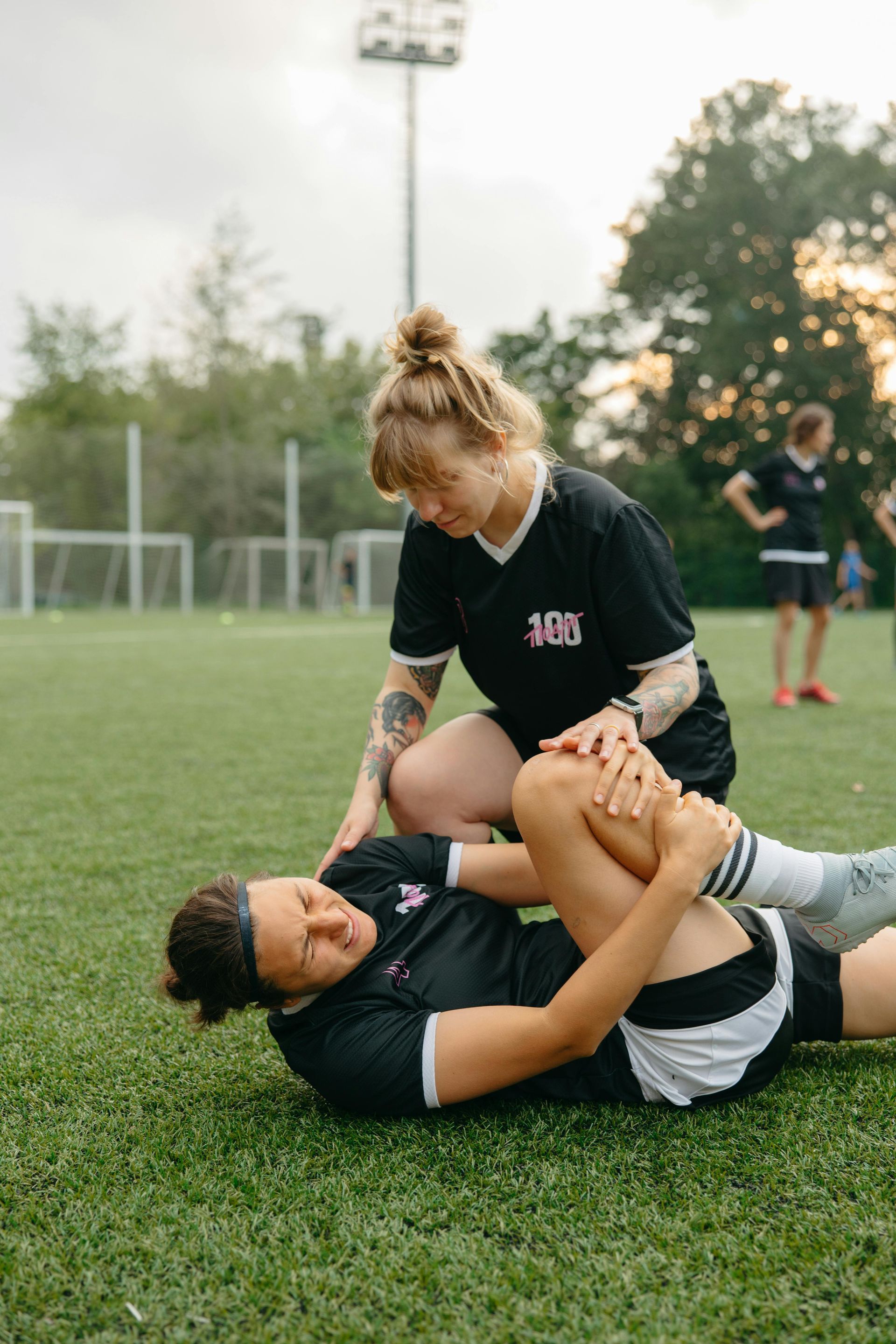

Knee Injuries in Tennis: The Hidden Threat Shadowing Wimbledon & Modern Tennis
As the grass courts of SW19 prepare for another summer of serve and volley, all eyes are on Wimbledon for the premier event on the tennis calendar. But alongside the excitement comes an increasingly familiar concern: injury. Former British number one Jack Draper is currently facing a race against time to recover from a knee tendon injury ahead of the tournament, and his situation is far from unique on the professional circuit. Fan favourite and 2-time Wimbledon champ Carlos Alcaraz has already confirmed he won’t be appearing on Centre Court, pulling out with an injury to his wrist.
Knee injuries have become one of the most persistent threats in modern tennis, cutting short tournaments, disrupting seasons, and in some cases, defining careers. The explosive lateral movements, sudden directional changes, and high-speed lunging that make the sport so compelling also place enormous strain on the knee joint.
There is also an additional factor to consider. Unlike many team sports, professional tennis players compete across multiple surfaces over a near year-round schedule, leaving little room for the body to recover from cumulative load. The three traditional surfaces (hard court, grass and clay) all bring their unique conditions and challenges to play.
Which tennis surface is worse for knee injuries?
Hard Court Knee Injuries
Hard courts generate significantly greater impact forces than clay or grass, and according to research and stats, hard courts are associated with more injuries overall. With 2 of the Grand Slams playing on hard courts, this provides a major challenge for players. Over the last decade, the US Open’s hard courts have seen by far the most retirements of the 4 Grand Slams. Its placement as the last official Grand Slam of the year definitely plays a factor here, but it’s still indicative of the dangers of the hard court surface. Players who spend a high proportion of their season on hard courts accumulate more stress through the knee joint over time. For most amateur and casual players, hard courts are the standard, especially in the UK, so this represents high levels of stress and pressure on the knees and is why knee injuries are so common at the lower end of the game.
Grass Court Knee Injuries
That being said, that doesn’t mean clay and grass courts don’t require high levels of stamina, endurance and fitness. While grass and clay provide a softer and more cushioned surface, grass courts are known for slippery surfaces and low bounces, meaning greater emphasis on bending and lunging.
Wimbledon is famous for dramatic slips during play. Notable examples of slips at Wimbledon leading to injuries include;
- Serena Williams (2021) - In one of her final appearances on centre court during her legendary career, Serena slipped during her first round match and sustained a hamstring injury that forced at emotional retirement.
- Bethanie Mattek-Sands (2017) - Bethanie ruptured her patellar tendon and dislocated her kneecap in one of the most gruesome events in Wimbledon history. Bethanie would eventually need major reconstruction surgery but would go on to return and continue a very successful doubles career, winning multiple majors.
- Rafa Nadal (2009) - The legendary Spaniard's difficulties with his knees over his career are well-known and they resulted in notable difficulty at Wimbledon towards the end of his career. Nadal pulled out of his title defence in 2009 and suffered early exits between 2012-2017, often speculated to be due to his knee troubles.
- Adrian Mannarino (2021) - During a thrilling match with Roger Federer on centre court, Mannarino slipped during the 4th set and badly injuring his right knee. Despite initially trying to continue, he eventually had to retire in the 5th set. Ironically, Federer had only recently returned from knee surgery and would undergo further knee surgery immediately following the tournament.
Clay Court Knee Injuries
Clay is often regarded as the preferred surface for avoiding knee injuries. Rafa Nadal’s absolute dominance on clay, winning 90% of his matches on the surface, is a great example of this, given the knee issues that plagued his later career. Higher bounces, a softer surface and a slower overall game are big contributors to this, as well as the surface allowing players to slide into shots, reducing the force on planting for every shot. Frequent sliding does bring the threat of injury due to getting caught mid-slide, which can generate a lot of rotational force in the joints. Clay matches are also notable for their length and are a major stamina test which, during a long season, can often lead to lengthy sessions exacerbating injuries or breakdowns due to fatigue. Clay surfaces are more associated with ankle, foot and muscle injuries due to this.
Overuse knee injuries in tennis
- Patellar tendinopathy: Known commonly as "jumper's knee", this is perhaps the most common overuse injury in tennis. The patellar tendon absorbs force with every bend, lunge, and push-off from the baseline. Over a season involving hundreds of matches and thousands of practice hours, the tendon fibres can begin to break down, causing persistent pain below the kneecap.
- Iliotibial band syndrome: The ITB runs along the outside of the thigh and knee. Repetitive lateral movement and the constant loading on the bent knee during groundstrokes can cause friction and inflammation at the point where the band crosses the outer knee.
- Chondral degeneration: The cartilage lining the knee joint can wear down over time from the repetitive impact of hard court surfaces in particular. This gradual degradation is a common finding in players with long professional careers and can lead to chronic pain and reduced mobility.
Acute knee injuries in Tennis
- Meniscus tears: The meniscus acts as a shock absorber and stabiliser within the knee. The twisting, planting, and rapid acceleration inherent to tennis make it vulnerable to both acute tears and gradual wear. Meniscal injuries are among the most frequently reported in the sport, ranging from minor peripheral tears that heal conservatively to complex tears requiring surgery.
- Anterior cruciate ligament (ACL) rupture: While less common than in contact or team sports, ACL tears do occur in tennis, typically from an awkward plant of the foot combined with a sharp rotational force. Recovery from ACL reconstruction averages nine to twelve months, representing a significant disruption to any professional career.
- Collateral ligament injuries: The ligaments on either side of the knee can be strained or torn through sudden lateral movements, particularly on slippery or uneven surfaces.
Knee Injury risk factors in Tennis
- Workload: The density of the professional calendar, particularly the volume of hard court events through the North American swing, leaves limited recovery windows between tournaments. This is compounded for players who regularly go deep in draws week after week.
- Biomechanics: Movement patterns, stroke mechanics, and footwear all influence how load is distributed through the knee. Poor landing mechanics after a split step or a mistimed lunge can create the conditions for both acute and overuse injury.
- Fatigue: Late-round matches extending over multiple hours, combined with the physical demands of travel and a compressed schedule, reduce neuromuscular control and increase the risk of injury.
Notable knee injury examples from the tour
- Novak Djokovic: The most prominent recent example of knee surgery at the highest level. Djokovic underwent surgery to repair a torn meniscus in June 2024, forcing his withdrawal from Roland Garros mid-tournament. Despite the setback, he went on to reach that year’s Wimbledon final and then claimed Olympic gold in Paris just weeks later in one of the most incredible sporting recovery stories, though his recent career has continued to be managed carefully around his knee.
- Rafael Nadal: As mentioned above, knee problems were a defining theme throughout Nadal's career. Chronic patellar tendinopathy and subsequent structural damage to the knee joint required multiple rounds of intervention over nearly two decades. His struggles on hard courts became well documented as the cumulative load of his playing style took its toll.
- Roger Federer: Widely recognised as one of the best to ever play the game, the back end of Roger’s career was plagued by knee injuries and underwent a number of knee surgeries to repair a torn meniscus and address cartilage damage. These would eventually lead to his retirement in 2021.
- Jack Draper: The current British number one has had to manage physical setbacks as his ranking has risen and his tournament load has increased. His current knee tendon injury ahead of Wimbledon reflects the fine margins professional players operate within at the top of the game.
Prevention and management
As with cricket and football, prevention is far preferable to treatment. A combination of structured strength and conditioning work targeting the quadriceps, hamstrings, and hip stabilisers can help absorb load and protect the knee joint. Workload monitoring is increasingly sophisticated at the elite level, with teams tracking on-court time, surface transitions, and training intensity to manage cumulative stress.
For injuries that do occur, modern physiotherapy techniques, including eccentric loading programmes, blood flow restriction training, and targeted rehabilitation protocols, have improved outcomes considerably for conditions such as patellar tendinopathy. Meniscal tears and chondral damage can be addressed with arthroscopic surgery with generally good results, though return-to-play timelines of nine to twelve months for ACL reconstruction remain a significant challenge.
The hope for Wimbledon 2026 is that the tournament is defined by the tennis rather than the treatment room. With the depth of talent currently on tour, there is every reason for optimism. But as the experiences of Djokovic, Nadal, and now Draper demonstrate, the knee remains one of the most vulnerable structures in the professional game, and managing it well is as much a part of a successful career as a reliable second serve.
If you are experiencing any knee pain or discomfort, whether from sport or otherwise, contact us for expert assessment and advice.