
Managing Knee Pain During Marathon Training: When to Push, When to Adapt, and When to Stop
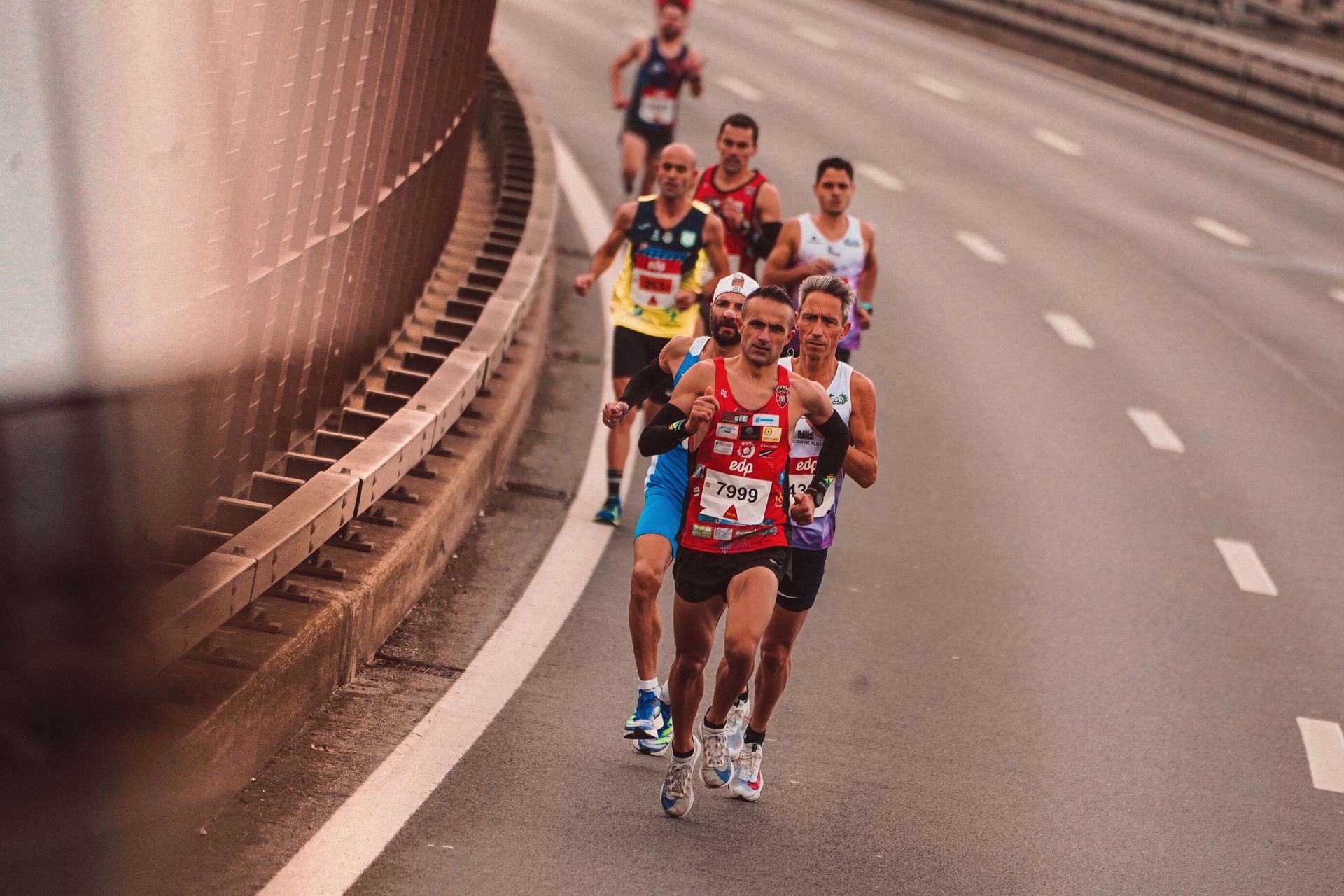
Training for a marathon is one of the most rewarding physical challenges a person can take on, and there’s a continually growing number of marathon and half-marathon events throughout the UK. It is also one of the most reliable ways to find out exactly what your knees are made of. For the majority of runners, some degree of discomfort will surface during a training block, especially if you are mostly starting from scratch; the question is not whether to take it seriously, but how seriously, and what to do about it.
Not all knee pain is the same
The first and most important thing to understand is that knee pain during marathon training exists on a spectrum, and where your pain sits on that spectrum should determine how you respond to it.
Mild muscle soreness around the knee after a long run, the kind that fades within 24 to 48 hours and does not affect how you walk, is a normal part of adaptation. The body is absorbing new loads and responding accordingly. This kind of discomfort does not require you to stop.
Pain that persists beyond 48 hours, that is present at the start of runs and does not ease off, that worsens as mileage increases, or that changes how you are running to compensate is a different conversation. That is the knee telling you something is being asked of it that it cannot currently handle.
The most common running injuries
Patellofemoral pain syndrome (runner's knee) — a dull ache around or behind the kneecap, typically worse on downhill sections, stairs, or after sitting for long periods. It usually reflects insufficient strength in the quadriceps and hip stabilisers relative to the demands being placed on the joint. As such,
runner's knee is one of the most common injuries picked up during running by amateur runners.
Iliotibial band syndrome —
ITB syndrome is a common overuse issue, appearing as pain on the outer side of the knee, often appearing consistently during a run and becoming worse the further you go. It is almost always a volume and recovery issue, and one of the most common reasons marathon runners find themselves in a clinic.
Patellar tendinopathy — pain directly below the kneecap, particularly at the start of a run or after periods of rest following heavy training. It can be deceptive in its early stages because it sometimes eases mid-run, encouraging people to run through it longer than they should.
Meniscal irritation — pain on the inner or outer joint line of the knee, sometimes accompanied by swelling or a sensation of stiffness. Unlike tendon pain,
meniscal problems do not always follow a predictable pattern with load and warrant earlier assessment.
What to allow for when training for a marathon
The reality is that marathon training is difficult and can be a massive shock to the system even if you’ve ran one before. Marathon training places a cumulative load on the knee over weeks and months. Most marathon runners experience some form of overuse injury due to this, as it’s a lot of hard miles and a lot of the same motions over and over.
Most overuse injuries do not appear because of what you did in yesterday's session. They appear because of what you did in the four weeks before that. This means that feeling good today is not always a reliable guide to whether your training load is sustainable. A gradual weekly mileage increase of no more than ten per cent is a widely used guide precisely because it gives your body time to recover and adapt to the change. You’ll also want to allow for a cool-off period every 4 weeks or so, dropping your mileage down 20% or so to reduce your load and maintain regular runs that should be more manageable.
Factoring in adequate recovery, both between sessions and within the wider training block, is not optional. It’s also important to be realistic here. A lot of the training plans you will find online are designed by professionals or experienced runners, with many targeted towards those with at least an intermediate level of experience with long-distance running, so they may not allow for rest days or particularly forgiving ‘easy days’.
When building out a training plan, your easy or recovery days need to actually be easy. Long runs followed immediately by speed sessions, with no recovery between them, are a common pattern in runners who end up injured in weeks eight to twelve of an eighteen-week plan.
What to change in your marathon training
If knee pain does develop, adapting rather than stopping entirely is often the right first response, provided the pain is mild and the pattern makes sense for an overuse injury.
Reducing weekly mileage by twenty to thirty percent for one to two weeks while maintaining the structure of training (easy runs, one longer run, strength work) can allow an irritated tendon or inflamed ITB to settle without losing significant fitness. Swapping a road run for pool running or cycling removes impact load while keeping cardiovascular conditioning.
Strength training is the most consistently underused tool in the runner's kit and something that is often missed in favour of more runs to the runner’s detriment. Targeted work on the quadriceps, glutes, and hip abductors addresses the root cause of many common knee injuries rather than just managing the symptoms. If this is not already part of your training, adding two sessions per week during a period of reduced running mileage is time well spent.
Gait assessment is worth considering if the same injury keeps recurring. Small changes to your running technique or your gear can meaningfully reduce stress on the knee without requiring any change to training volume. Poor technique is common among runners, and it can be hard to break habits when they form, so getting your form assessed early can be a significant help in reducing early niggles.
When to stop marathon training
While we all find ourselves pushing through pain at times, there are circumstances where continuing to train through knee pain is not a matter of toughness; it is just making a short-term problem significantly worse.
Stop running and seek assessment if any of the following apply: the knee is swollen, either visibly or with a sensation of fullness inside the joint; pain is present at rest or is waking you up at night; you are altering your running gait to avoid pain rather than running normally; pain is scoring above a four or five out of ten during a run; or symptoms are getting progressively worse week on week despite attempts to correct it.
In these situations, continuing to run risks turning a manageable overuse injury into something that requires a much longer period away from the sport or, in some cases, surgical intervention. A two-week assessment and rest period costs you relatively little fitness. Running through a significant tendon or meniscal injury for another six weeks can be detrimental to your overall knee health and will only cause pain and likely a harmful change in technique.
Marathon training rewards consistency over months, not heroism over days. A bit of pain is part of the struggle and what makes the final achievement so rewarding, but it should always be managed appropriately and within your own limits. Build up the endurance, work on strengthening your knees and allow proper periods of rest, and you’ll find marathon training will come a lot more naturally, and those tougher spells that always come in training will be easier to manage.
If knee pain is affecting your training and is not following the expected pattern, early assessment is always the better option. Caught early, it can be managed and a proper management plan can be put in place rather than waiting for the problem to get to a point of no return. Our team is available for knee consultations across Yorkshire so don’t put it off. Get booked in today using the button below.